Proud partner

Proud partner
Article
Summary


Thanks to rapid developments in AI, you can create content in no time at all. But does it actually make an impact? You need more than just a few smart tools for that. The secret to powerful content often lies in the formats you use. We’ll explain everything to you.
Formats provide structure and consistency to your content. This helps build recognition and trust amongst your audience. It also brings more structure to your content planning. This means you’ll rarely feel as though you’re running out of ideas. With a strong format, you always know what to do. This ensures more efficient production and a consistent output.
However, it is important to think carefully about the types of formats you use. Creativity, personality and relevance all play a part here. When you incorporate these elements, you will find that you encourage your target audience to engage with your content. In addition, the power of repetition also works in your favour. Repetition ensures that your message sticks better with your audience, making them more likely to take action, such as sharing your content or making a purchase.
Coming up with a format is a creative process. Don’t expect to have come up with a good format within a quarter of an hour; take the time to really think it through.
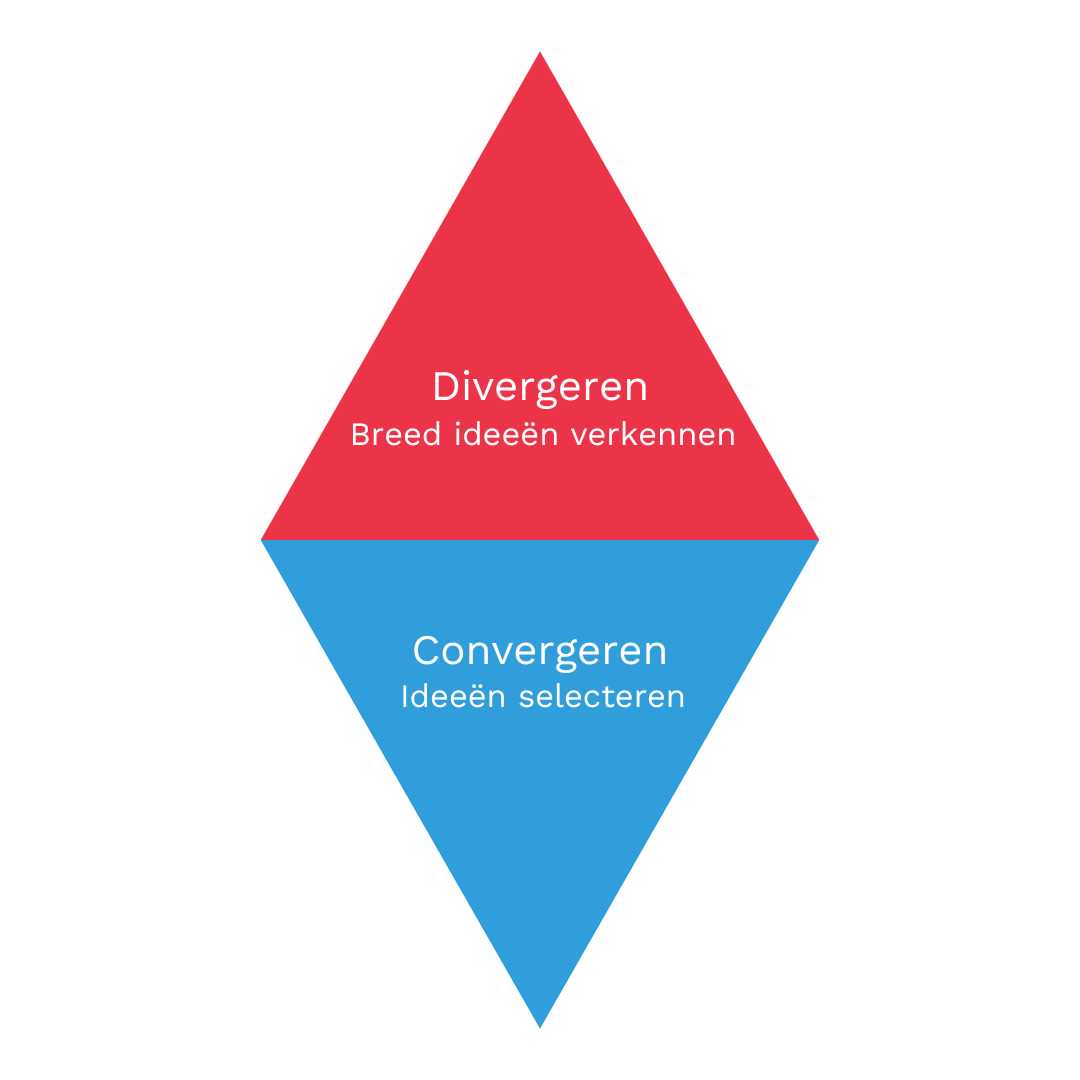
Before you start brainstorming, we recommend that you think about what your goal is and who you want to reach. Have you clarified this? Then it’s time to brainstorm. This is also known as the divergence phase. You can use various techniques, such as mind mapping or free association. It’s important to remember that nothing is wrong during the brainstorming session. Neither you nor your brainstorming partners should judge any of the ideas just yet. Do agree in advance on a maximum time limit for the brainstorming session. By sticking to this time limit, you ensure that you sometimes take just a little longer to think things through, or that you don’t dwell on a topic for too long.
During the so-called convergence phase, you’ll need to make choices. Which ideas appeal to you most? Which ideas are realistic? And which ones do you want to take forward? It may also be that you can combine two ideas perfectly. In any case, striking a balance between originality, feasibility and relevance to your target audience is essential during this phase. Here, too, it is important to set a time limit. This ensures you work as efficiently as possible.
Various companies use different content formats. A common format used by companies in the home furnishings, bathroom fittings or flooring sectors is ‘home tours’. This format allows them to show how their product(s) look in their customers’ homes. Although many companies already do this, this format often works well because it offers a touch of inspiration and brings a sense of personality to the content. Do you want your company to really stand out in this regard? Then try adding a slight twist to it, in a way that suits your company. Do your competitors only share photos of the products? Then make sure your customer is also in the picture. It’s also a great idea to interview the customer and use their quotes in a blog and/or on social posts.
Once you’ve chosen one or more formats, it’s time to develop them further. Consider:
A compelling text, an eye-catching visual, engaging videos, a humorous podcast – or something else entirely? Consider what best suits your message and your audience. The presentation of the content must be professional and appealing, with attention to detail such as layout, visual elements and user-friendliness.
Consider which channels are best suited to your content. These can range from social media platforms to your own website, blog or newsletter. Each channel has its own advantages and disadvantages and requires a tailored approach to reach the target audience effectively. It can also be useful to apply content mapping. This involves, for example, posting a video on your website and YouTube, and promoting (part of the video) via Instagram Reels.
Come up with a recognisable and appealing title for your format. This helps make your content easily recognisable. Once your followers have seen the content format a few times, they’ll immediately know what it’s about.
How often do you want the format to appear? Do you want to create a weekly feature, or perhaps a monthly one? Consider how much time it will take you to produce the format and ensure that this fits within your available resources and schedule. It is important to be consistent, so that your audience knows when to expect something new.
Content formats, ticked. Now it’s time to really bring some structure to things. A content calendar is an indispensable tool for maintaining an overview and ensuring that your content is published consistently and on time. Although content formats provide structure to your planning, it’s always worth bearing in mind that you simply can’t always fit everything into a single format.
We hope you now have the right tools to create content formats. Are you still a bit stuck and would you like us to brainstorm with you? Please feel free to get in touch!




Our team is
ready to help you

