Proud partner

Proud partner
Article
Summary

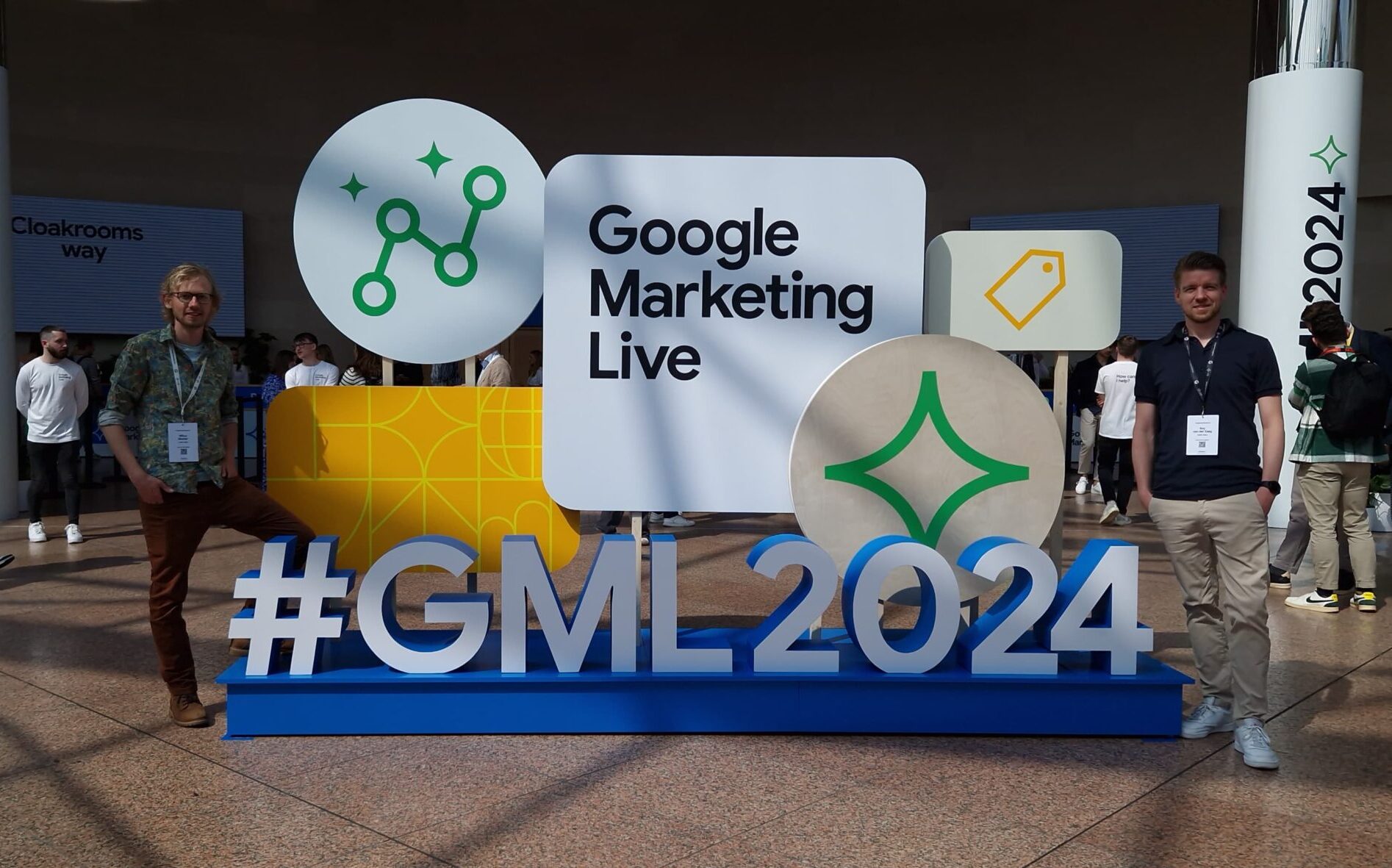
At Google’s annual marketing event – Google Marketing Live – the emphasis last year was still on AI, AI, AI and AI. This year was no different. AI is still the ‘buzzword’. Yet there was a clear difference from last year: this year, Google was much more specific and had made greater progress with AI applications. For example, more than 30(!) new updates were shared, and there was more discussion about the practical application of AI. Representing Traffic Today , Roy (Head of Strategy & Innovation) and Wilco (Head of Advertising) were in Dublin. In this blog, you’ll find the key takeaways.
During various sessions and talks, the collaboration between AI and the marketer was discussed. It may sometimes feel as though AI is making marketers redundant. If AI can write adverts and set bids, what is left for the marketer to do? Wyclef Jean gave a great talk on this on day two. This well-known artist, songwriter and producer demonstrated this using a Google AI music tool. Using the Google AI music tool, he created a song on the spot. He used prompts to spark his creativity, which he then built upon step by step. Ultimately, this resulted in a song about a random person in the audience. His main takeaway: AI is your servant and you are the master. This tied in nicely with the talk on day one: AI is not a marketer. Your creativity, strategic insights and expertise are your advantage.
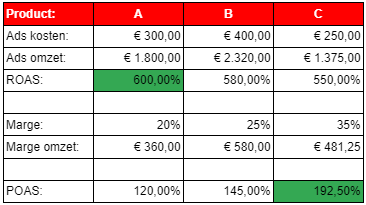
For some time now, there have been providers offering third-party solutions to manage margins and profits within Google Ads. This is usually referred to as POAS (profit on ad spend), as opposed to ROAS (return on ad spend). This can be a very effective strategy for companies that have a wide range of products with varying margins. To give a very simple example:
We have three products: A, B and C. In terms of ROAS, product A performs best, but when it comes to profitability, product C performs best.
Google will therefore also facilitate this within its interface. In practical terms, this means that within Merchant Centre you need to take two actions:
With Generative AI, Google is rolling out an ever-increasing number of ways to create automated assets. The average brand marketer won’t always be entirely happy with this. They often have a well-designed brand book with colours and fonts that need to be consistent across all communications, which Generative AI often fails to take into account. During Google Marketing Live, various options were demonstrated for how you can instruct AI tools to do just that. You can use colours and fonts as input, just like the images you currently use (both mood shots and product shots), to better define the framework within which you want to work. As a result, the visuals you create will align more closely with your brand book guidelines.
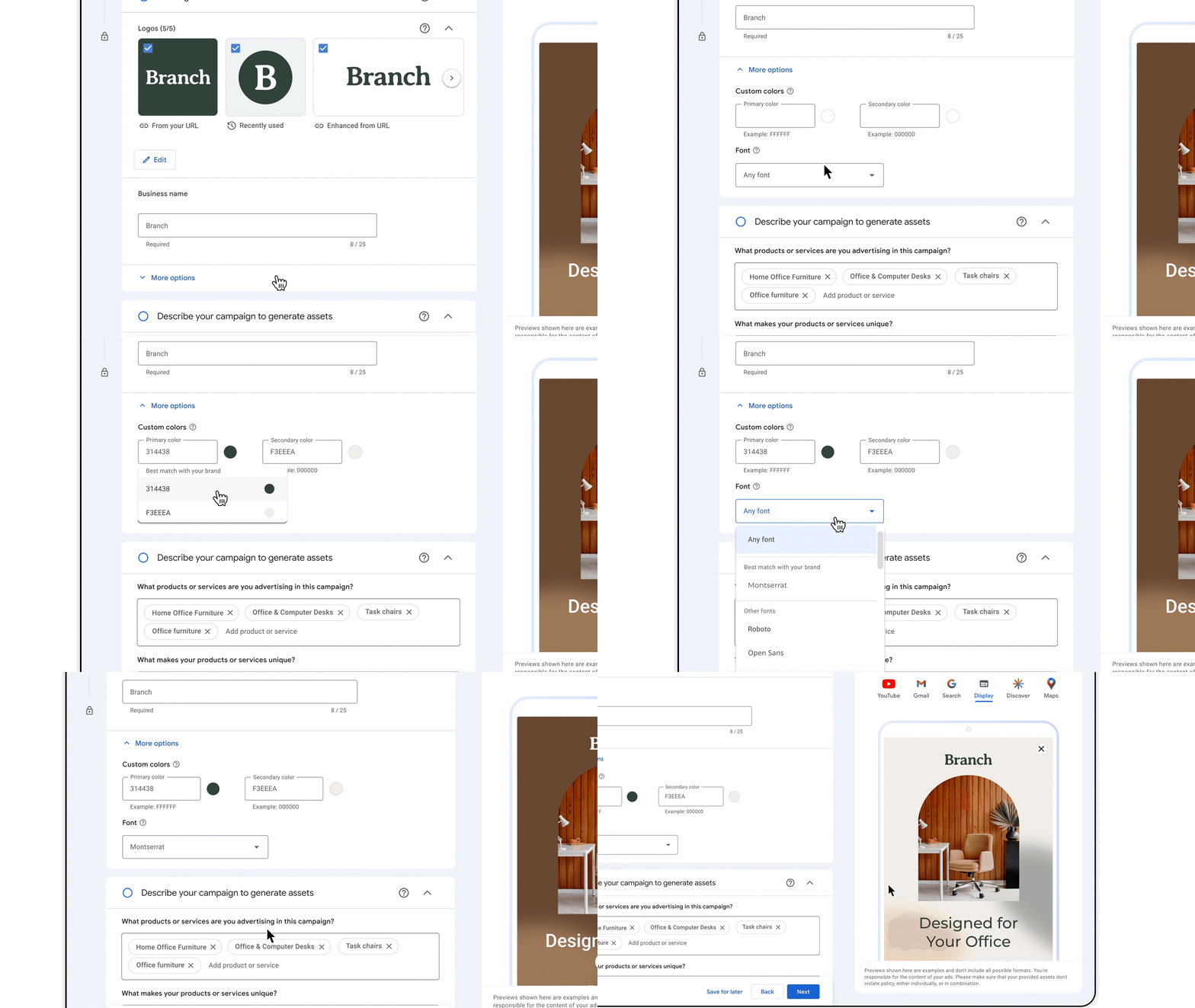
In addition, a brand profile is being introduced within Google. Here, your brand is displayed along with specific USPs and images. This is a great addition for strong brands. Who hasn’t found themselves having to run branded ads in Search to fend off competitors and prevent them from piggybacking on your brand name? With this new feature, that may be less of a concern, as your brand will have a much stronger presence under its own brand name.
Performance Max has grown rapidly as a Google product in recent years. Yet many (Ads) marketers have a love-hate relationship with it. Yes, you get good results and reach people through various channels, which used to be a lot of work. On the other hand, you lack (especially at the start) certain insights and controls to tweak. We’re gradually gaining more insight and options in this regard. We’ve already mentioned two of them in this blog:
In addition, there are two further updates on the horizon that we’re really excited about:
Last year at Google Marketing Live, Google unveiled Product Studio. This tool enables you to optimise your ‘ Shopping ’ products using AI. Think, for example, of adding different backgrounds. This tool, available within Google Merchant Centre Next, has now received some further updates. The most appealing feature is that you can now animate images.
However, what we often find in practice with such tools is that they work well for small batches of products, but if you have thousands of products, this is of course far too labour-intensive to be practical. In that case, you’ll need to look much more closely at bulk processing options.
On the second day, Roy and Wilco attended various roundtable discussions where product leads from locations including Mountain View (Google’s headquarters in California) answered questions. They also presented roadmaps for the coming period. Information from that session is not intended for sharing. However, we can say that, particularly in the area of reporting and metrics, there are likely to be some exciting developments on the horizon that will really help us measure the impact of campaigns. Having read this blog, are you curious to find out how we can help you further with Ads? Please feel free to get in touch.




Our team is
ready to help you

